Emergency cooling
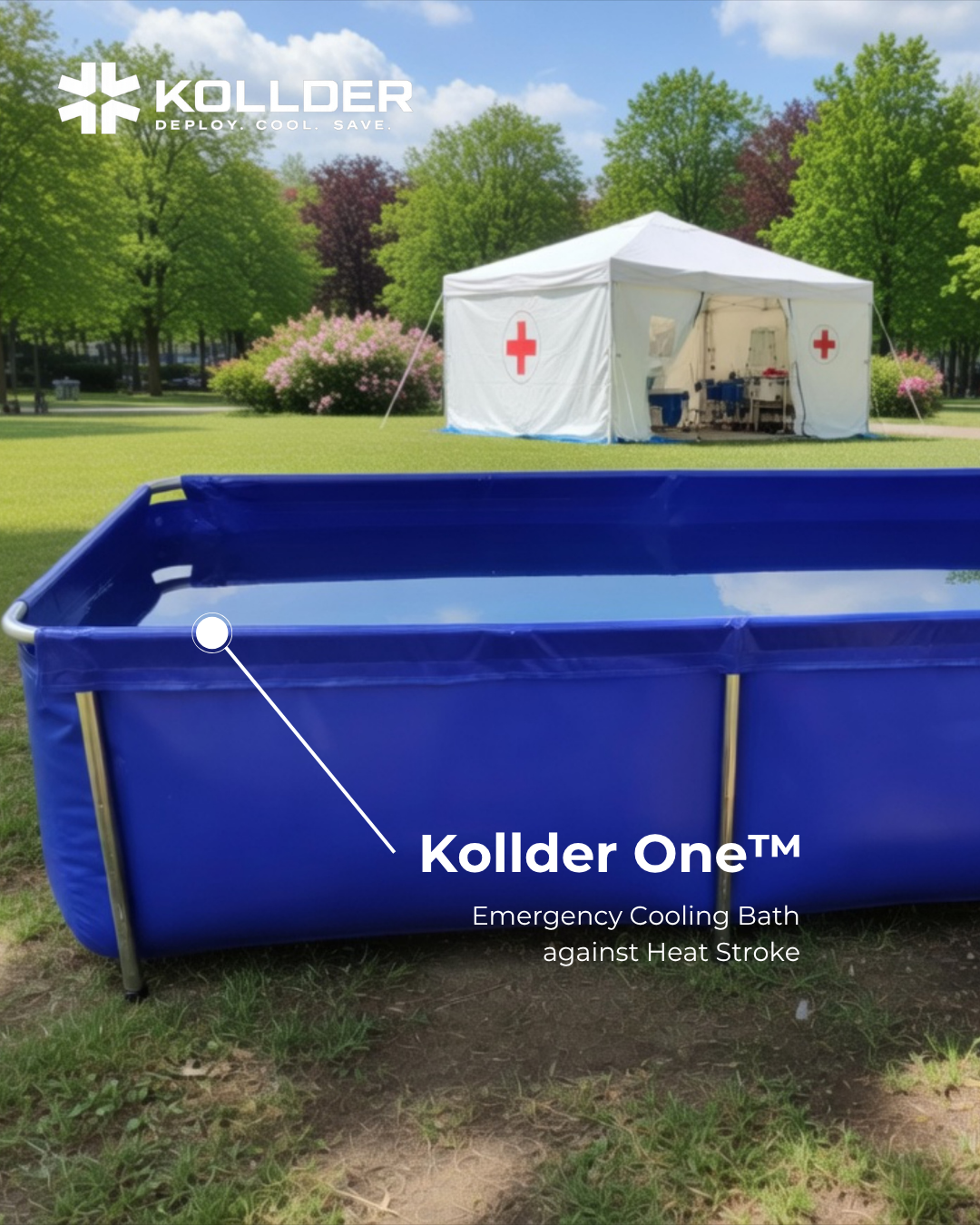
Marches, selection courses, load-bearing training, deployments in hot climates: exertional heat stroke is a documented risk in military settings. The Kollder tub deploys in under 2 minutes, by one person.
Kollder in the field
Exertional heat stroke (EHS) is among the leading non-traumatic causes of death and dropout in military settings. Selection marches, load-bearing training in full kit, and deployments in hot climates combine intense effort, protective equipment, and prolonged heat exposure into a particularly high-risk mix, including for young, well-trained service members.
For a summary of international findings, see our research review on exertional heat stroke in military settings and our guide to tactical medicine in hot environments.
The core rule, validated by the ACSM and the International Olympic Committee: never transport a casualty of exertional heat stroke before cooling them. Cold water immersion remains, to date, the only method fast enough to be clinically reliable for a service member in severe hyperthermia.
Whole-body cold water immersion cools at roughly 0.35°C per minute, compared to about 0.03°C per minute for wet towels or ice packs. Source: Casa DJ et al., Exercise and Sport Sciences Reviews 2007.
Across 401 documented cases of exertional heat stroke treated with immediate cold water immersion, survival is 100% when core temperature drops below 40°C within 30 minutes. Source: Korey Stringer Institute, Douglas Casa, UConn.
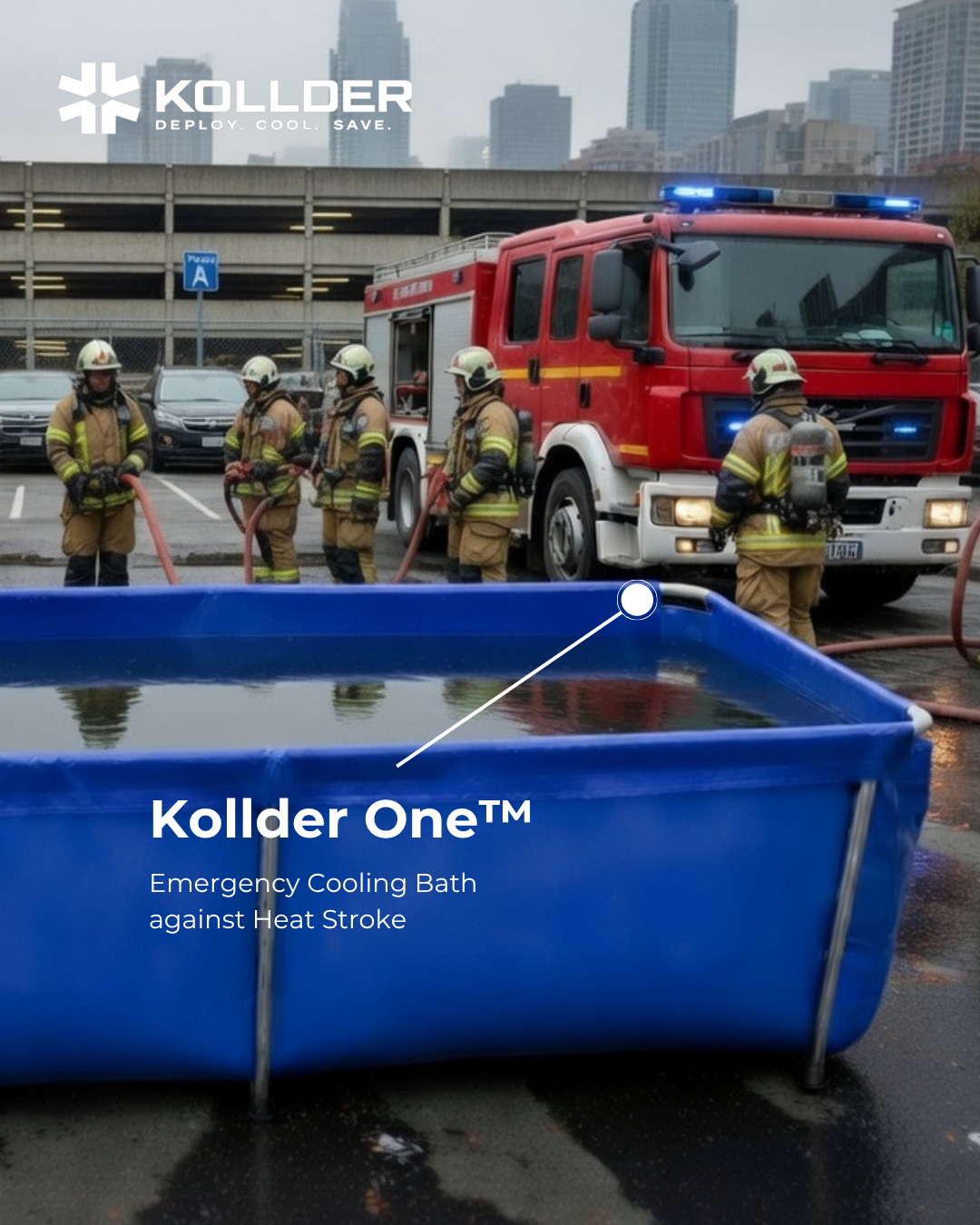
Cold water immersion is increasingly adopted as the standard of care on march serials, selection courses, and field exercises, mirroring the approach already standard in civilian fire and rescue services.
On a march serial or in a base camp, a tarp held by several personnel and filled from a hose or water tank remains a common practice. It works, but it ties up multiple people just to hold the tarp, takes time to set up, and limits medical access to the casualty for monitoring.
Our comparison of cooling methods breaks down the performance gap between these improvised solutions and equipment purpose-built for whole-body immersion.
What falls short in the field
Cooling equipment intended for operational military use has to meet precise requirements, regardless of brand. Kollder One™ and Kollder Go™ spec sheet below.
The equipment needs to be operational before medical support arrives, with no lengthy training or extra personnel tied up on setup.
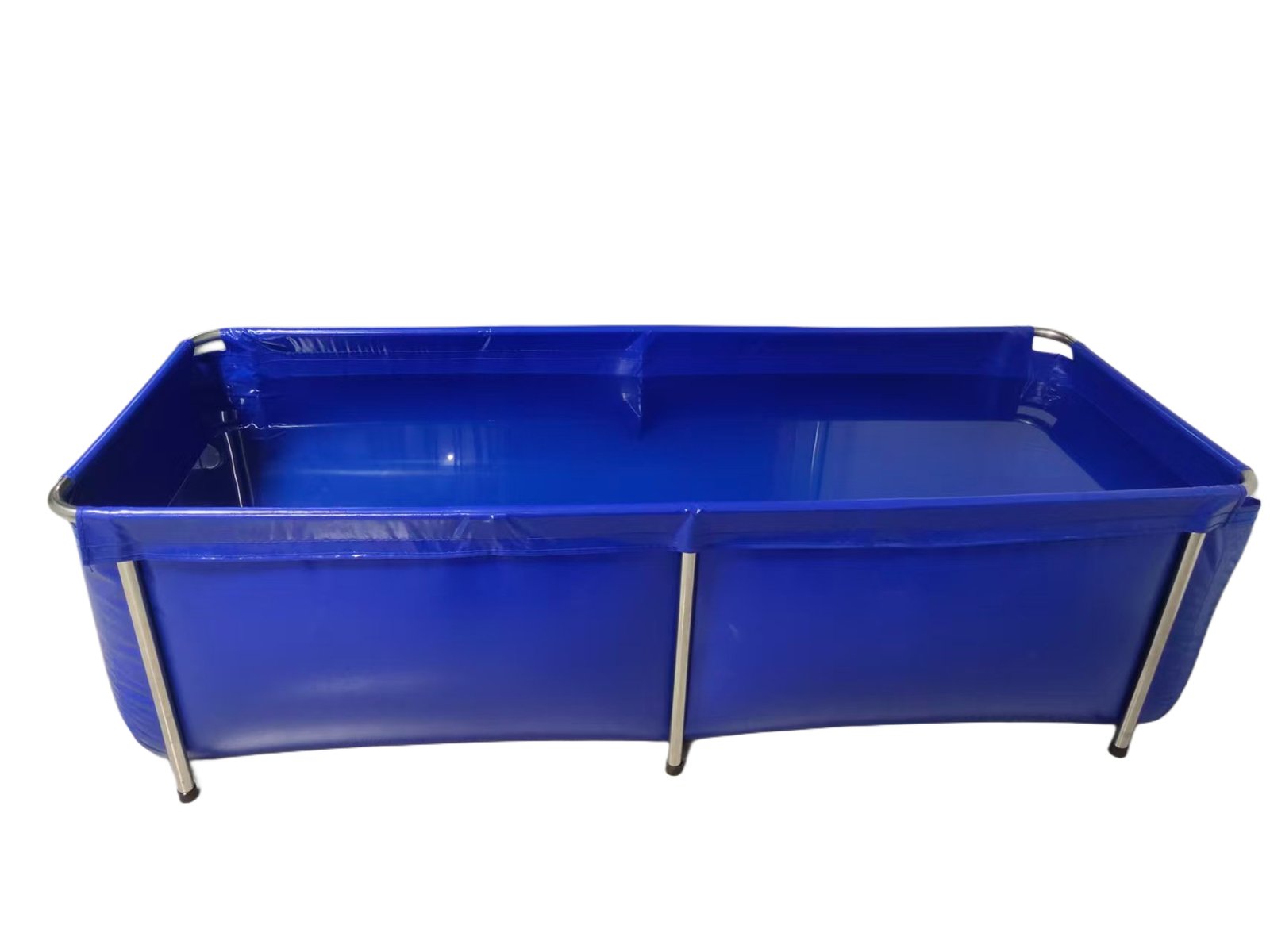
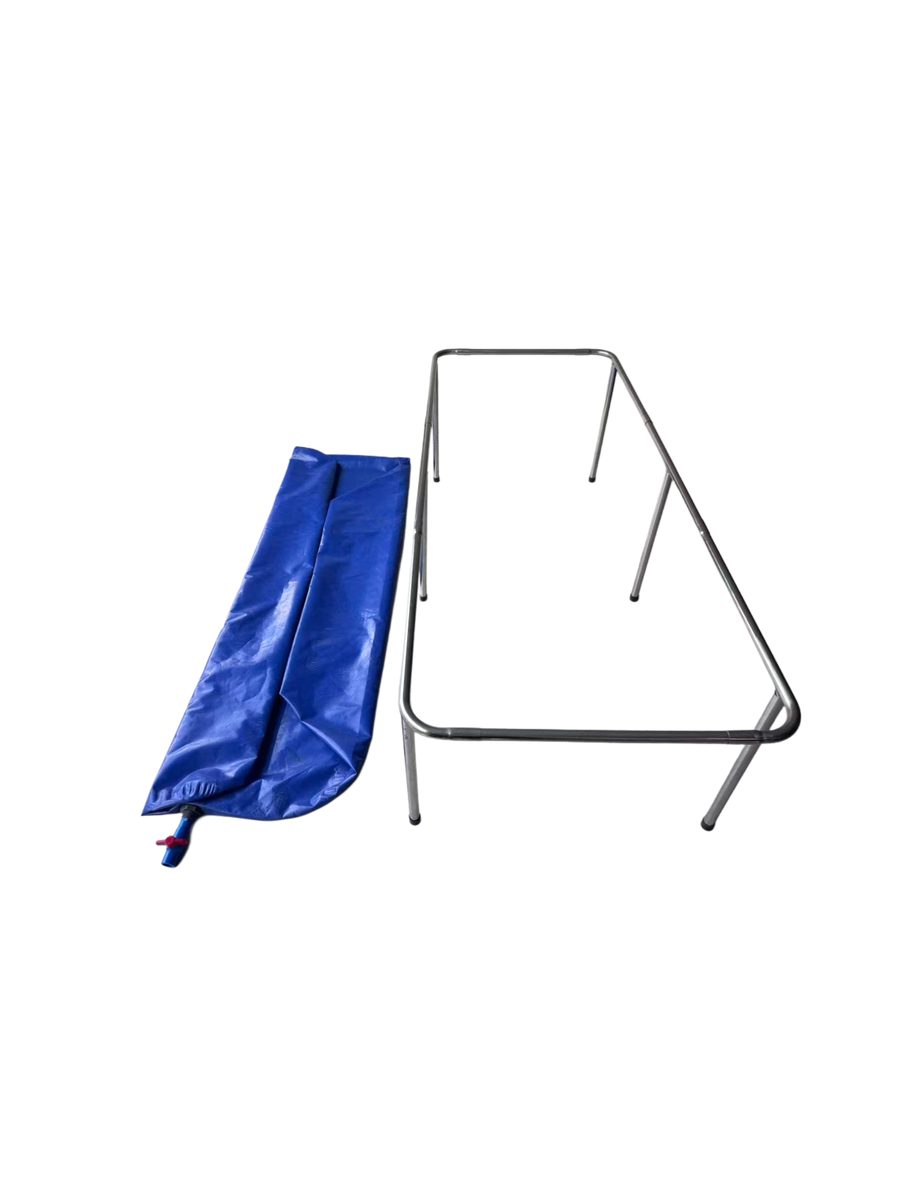
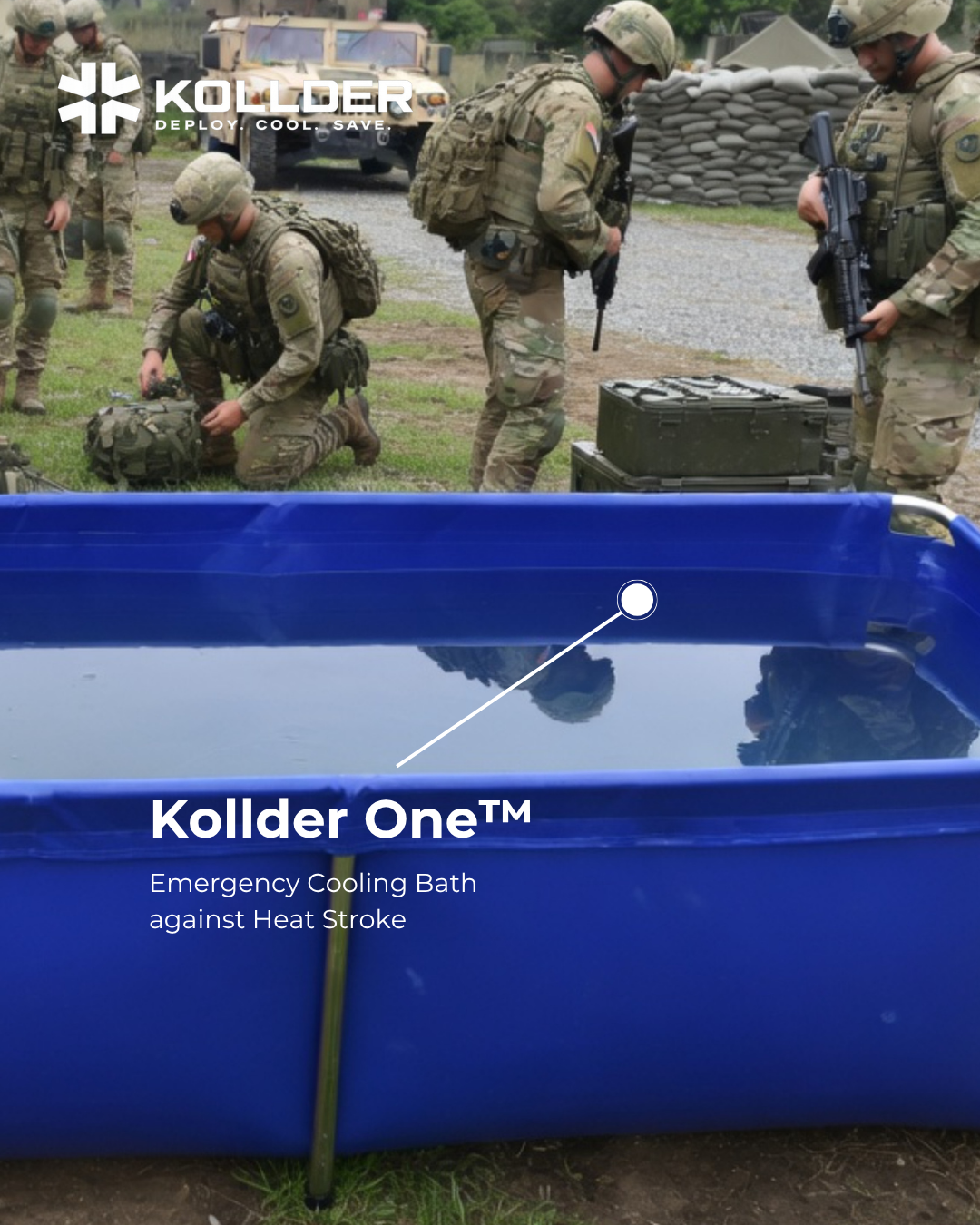
205 × 80 × 60 cm deployed. Stainless steel frame, SS304 Ø6mm stainless hinges, 6 support points with cross-bracing: it holds a casualty in full kit steady on uneven ground, soft terrain, or track.
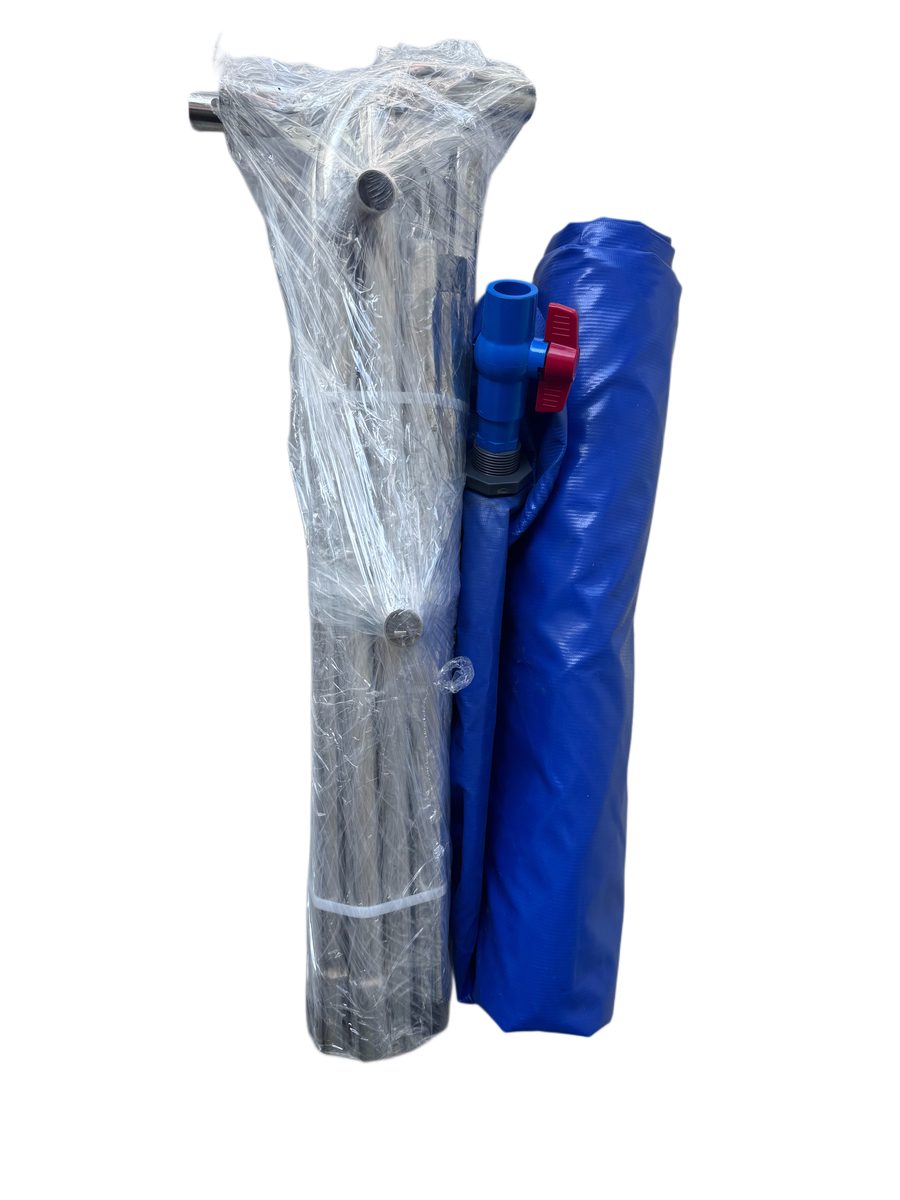
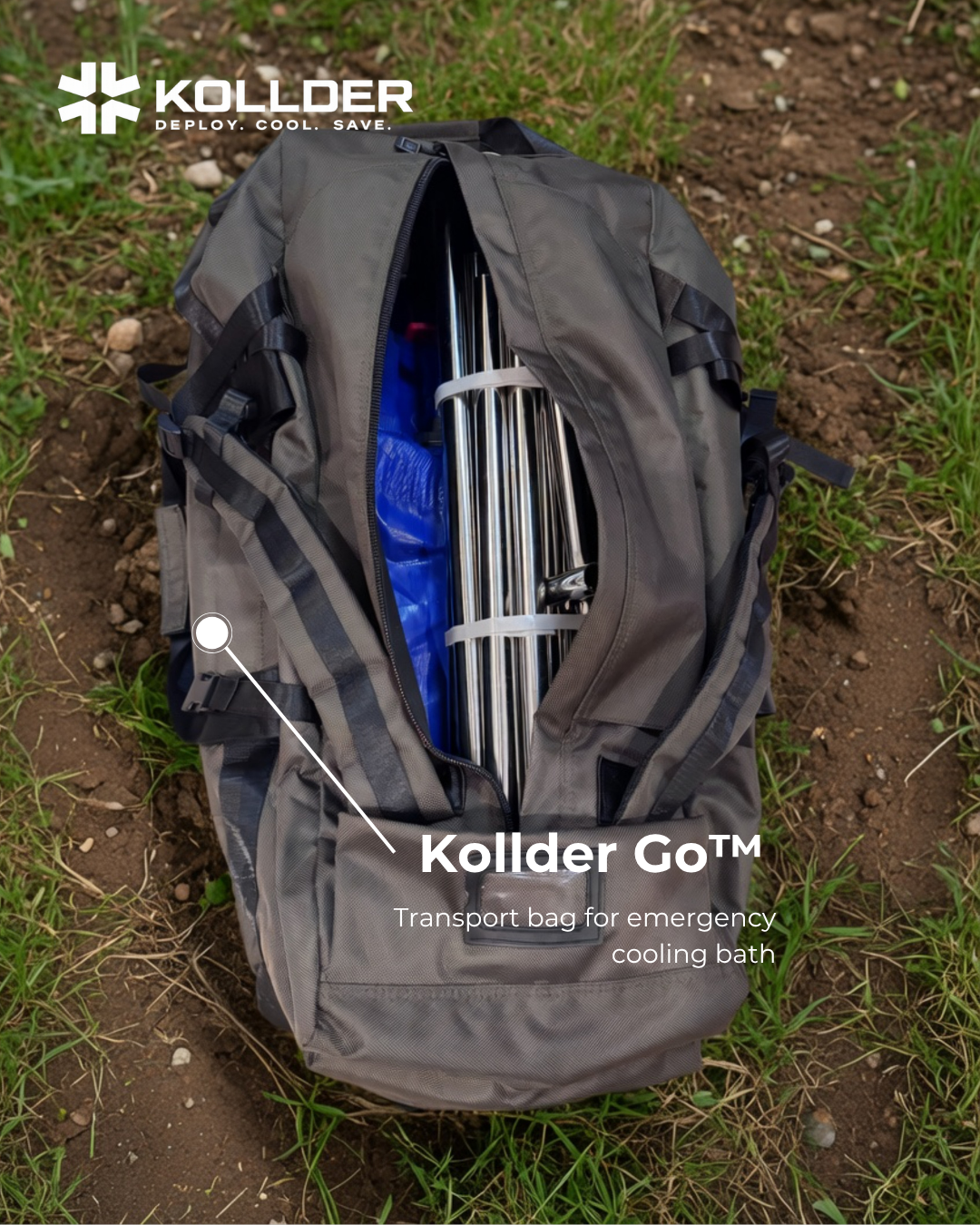
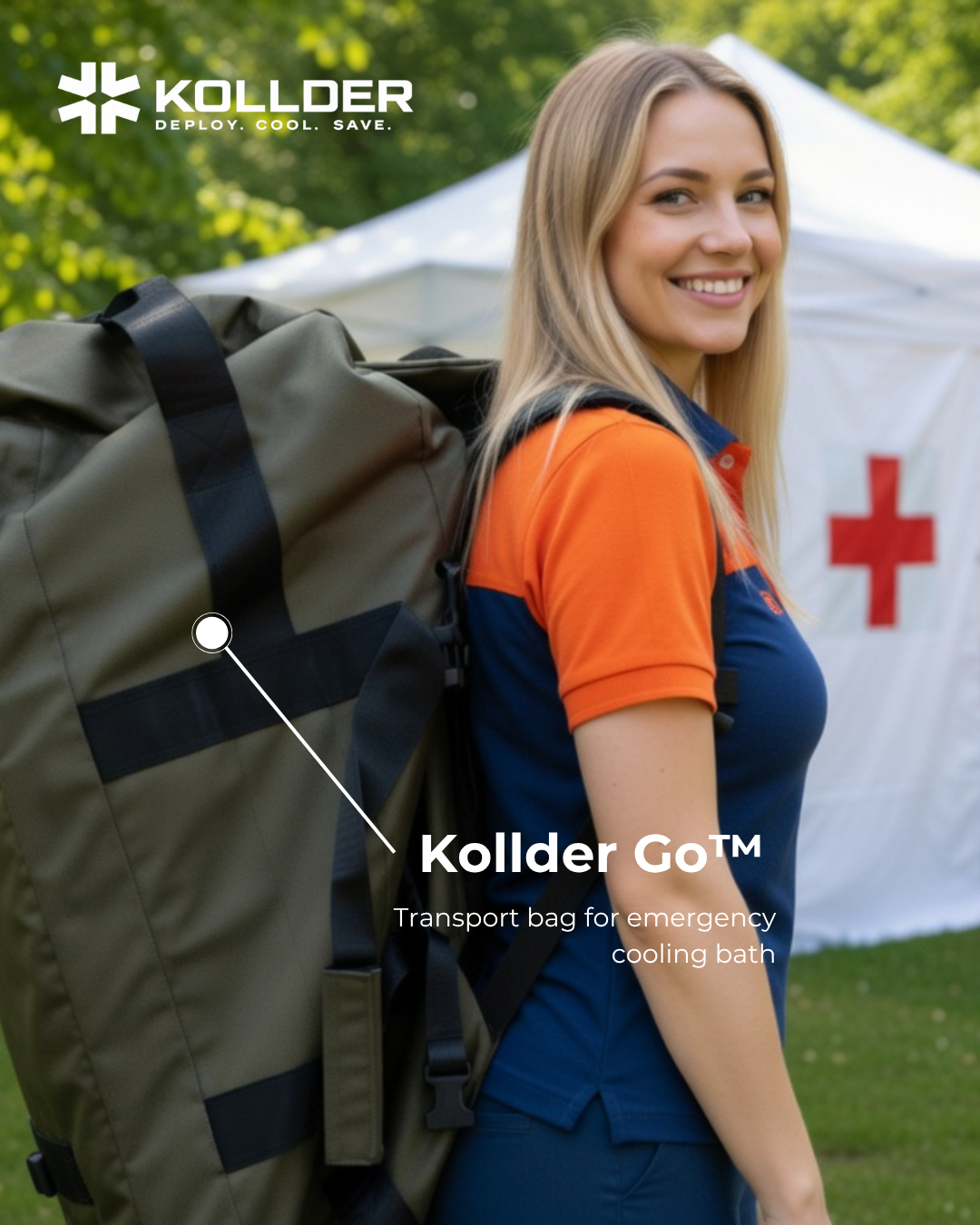
Hybrid transport bag, 85 × 10 × 10 cm folded, 11.1 kg, carried as a backpack, by hand, or wheeled. Deploys directly at the assembly point, with no vehicle or dedicated infrastructure required.
Whole-body immersion with full patient access allows clinical monitoring throughout cooling. The food-grade stainless steel structure cleans and disinfects quickly between exercises.
Four operational situations where fast cooling equipment makes the difference, for the service members themselves and for the medical personnel treating them.
Prolonged effort, load carriage, high heat: selection and endurance events concentrate the risk factors for exertional heat stroke. A cooling station at the finish line allows immediate treatment, before evacuation to the medical facility.
The risk of EHS also exists outside structured events, during regular physical training in full kit, especially in hot season. Cooling equipment kept on hand at unit level allows an immediate response from medical staff.
Prolonged standing, dress uniform, direct sun exposure: parades held during heat waves expose personnel to both classic and exertional heat stroke risk. See our article on cooling tubs deployed for France's Bastille Day parade.
On deployment in hot climates, the combination of load, protective equipment, and sustained effort calls for a fast, self-contained cooling capability, without relying on heavy medical infrastructure.
The reference treatment, validated by the ACSM and the IOC, is whole-body cold water immersion started immediately on site, before any transport to a medical facility. This is the Cool First, Transport Second protocol: cooling takes priority over evacuation until the casualty's core temperature drops below 38.6°C.
Intense physical effort, load carriage, protective equipment, and prolonged heat exposure during marches, selection courses, and deployments stack multiple risk factors on top of each other. International research identifies armed forces as one of the populations most affected by exertional heat stroke outside of elite sport.
An emergency cooling tub designed for operational use should be deployable by one person, with no tools, in under 2 minutes. This matters for a unit medical post or a march serial, where the equipment needs to be ready before medical support even arrives on scene.
Four criteria matter most: single-operator deployment speed, portability by rucksack or tactical vehicle, a rugged, easy-to-decontaminate material such as food-grade stainless steel, and 360-degree patient access so medical personnel can monitor the casualty throughout immersion.
Yes. Folded down into a compact 85 × 10 × 10 cm, 11.1 kg transport bag, it can be carried as a backpack, by hand, or wheeled, and deployed directly at the assembly point or finish line with no special logistics.
Tell us about your needs. We'll get back to you within 48 hours with a proposal tailored to your unit size and logistics constraints.
The Kollder emergency cooling tub at a glance: