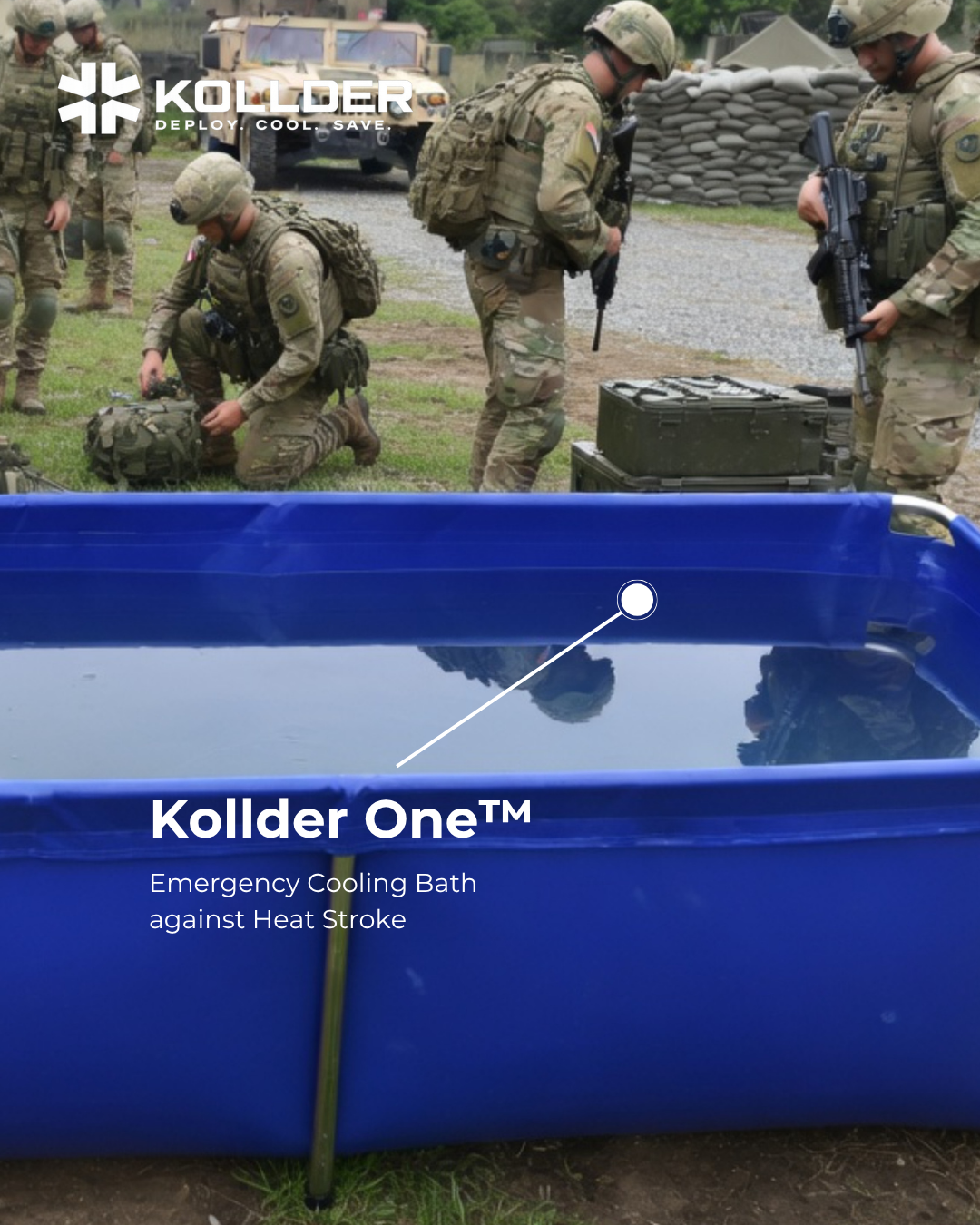
Emergency cooling
Radiant heat, PPE, sustained physical effort: steel and foundry work, food processing, construction, warehousing. Exertional heat stroke is a documented occupational risk. The Kollder tub deploys in under 2 minutes, by one person.
Kollder in the field
Exertional heat stroke (EHS) affects workers exposed to radiant heat, PPE, and intense physical effort: steel and foundry work, food processing, warehousing and logistics, construction. The risk isn't limited to heat waves: it exists whenever the combination of ambient heat, workload, and protective equipment outpaces a worker's ability to thermoregulate.
For practical guidance, see our heat illness prevention plan template and our overview of the OSHA heat standard.
The core rule, validated by the ACSM and the International Olympic Committee: never transport a heat stroke casualty before cooling them. Cold water immersion remains, to date, the only method fast enough to be clinically reliable.
Whole-body cold water immersion cools at roughly 0.35°C per minute, compared to about 0.03°C per minute for wet towels or ice packs. Source: Casa DJ et al., Exercise and Sport Sciences Reviews 2007.
Across 401 documented cases of exertional heat stroke treated with immediate cold water immersion, survival is 100% when core temperature drops below 40°C within 30 minutes. Source: Korey Stringer Institute, Douglas Casa, UConn.
The OSHA heat standard and France's Décret n°2025-482 both strengthen employer obligations to prevent and respond to heat risk, with a documented risk assessment for exposed roles.
On an industrial site, a hose-filled containment bin or a safety shower alone remain common responses to a worker in hyperthermia. They help, but neither allows fast whole-body immersion, nor easy access for the first-aid team to monitor the worker during cooling.
Our comparison of cooling methods breaks down the performance gap between these improvised responses and equipment purpose-built for whole-body immersion.
What falls short on an industrial site
Cooling equipment intended for use on an industrial site has to meet precise requirements, regardless of brand. Kollder One™ and Kollder Go™ spec sheet below.
The site's first-aid team needs to be able to respond immediately, with no lengthy training or extra personnel tied up on setup.
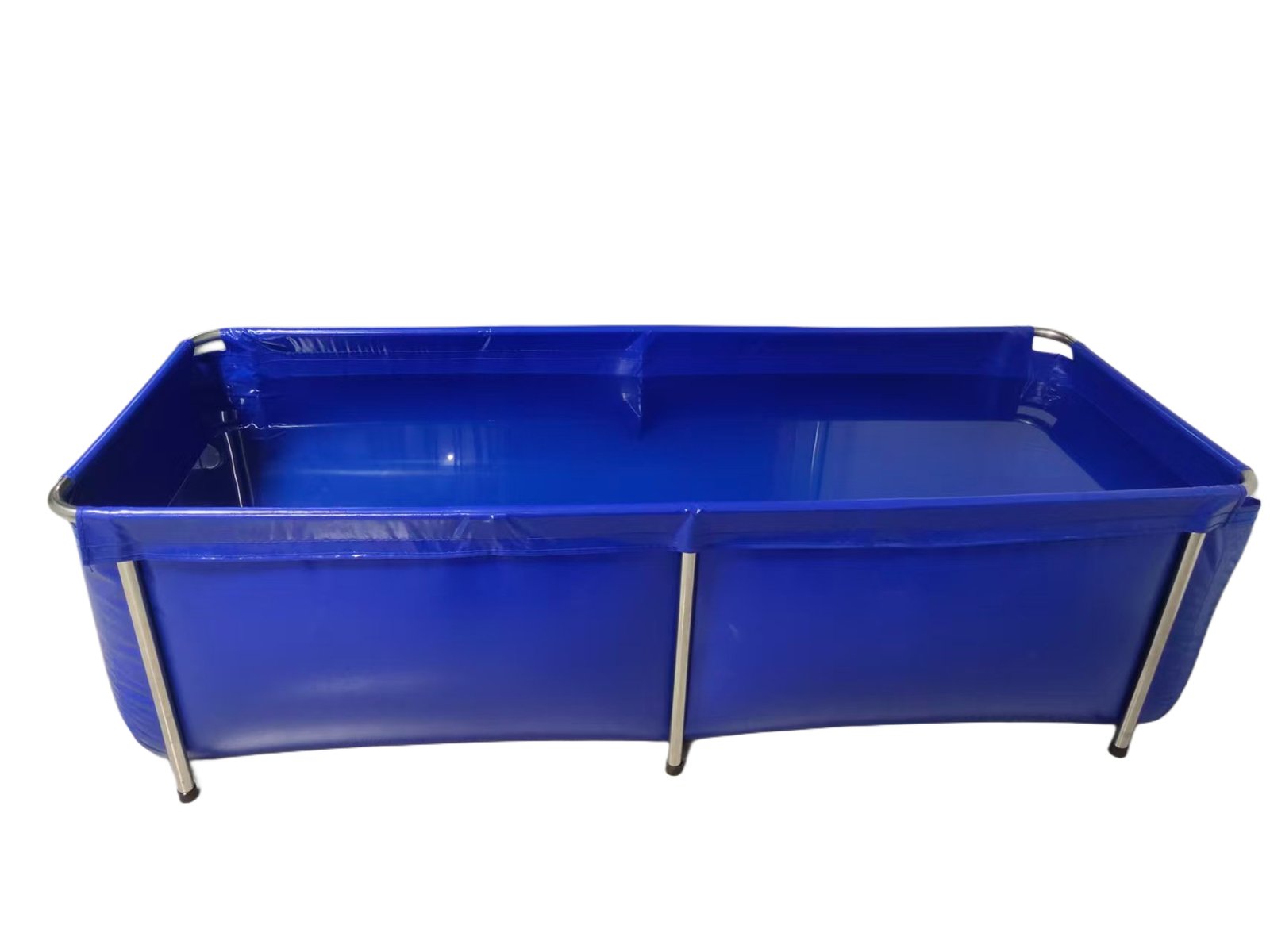
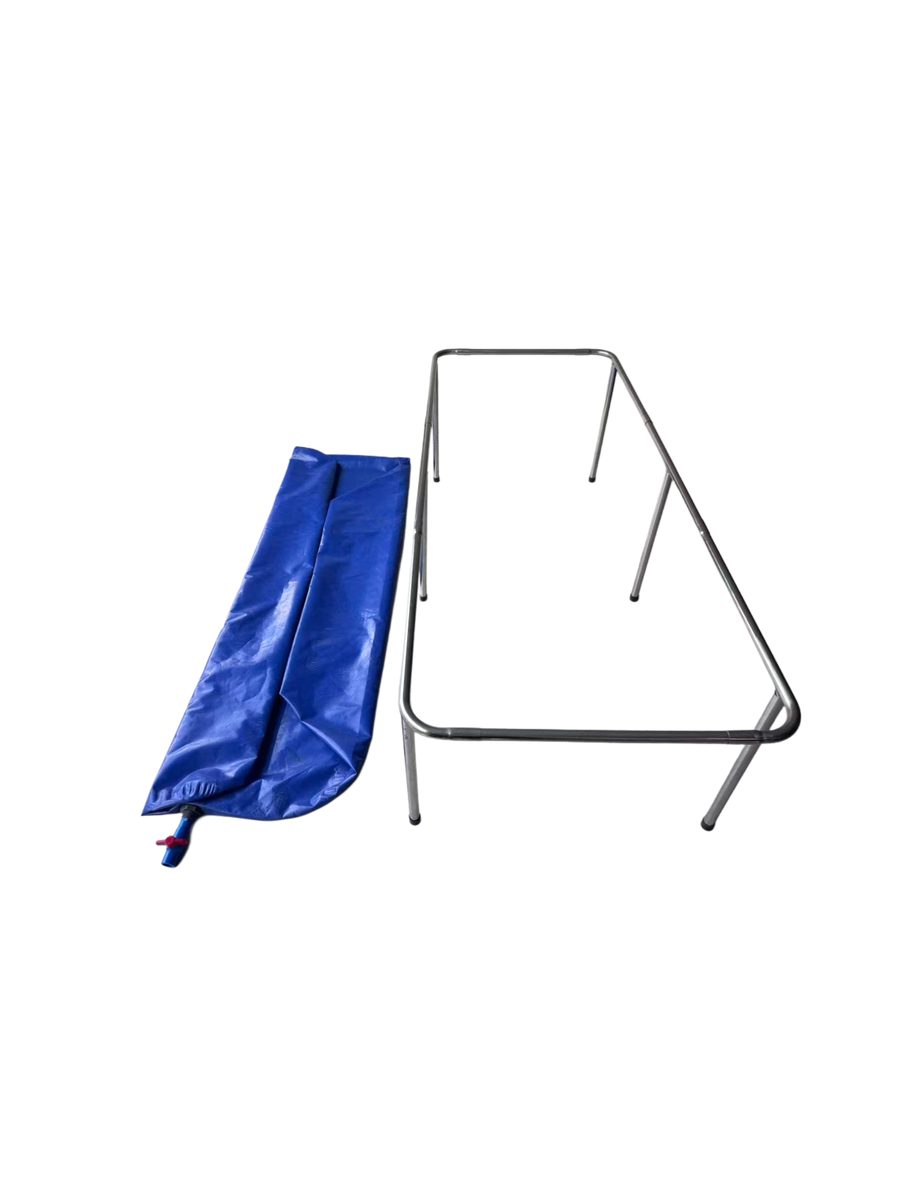
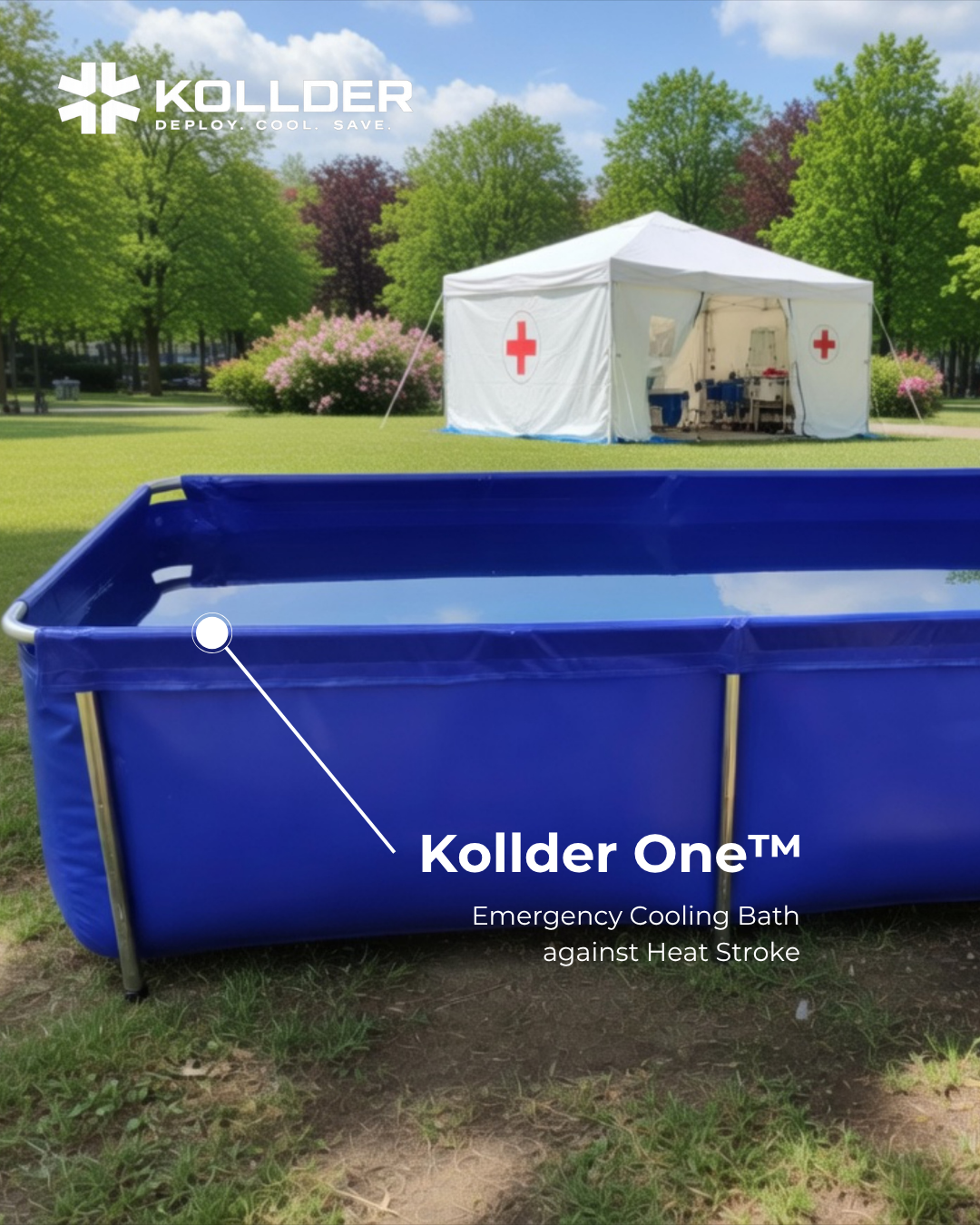
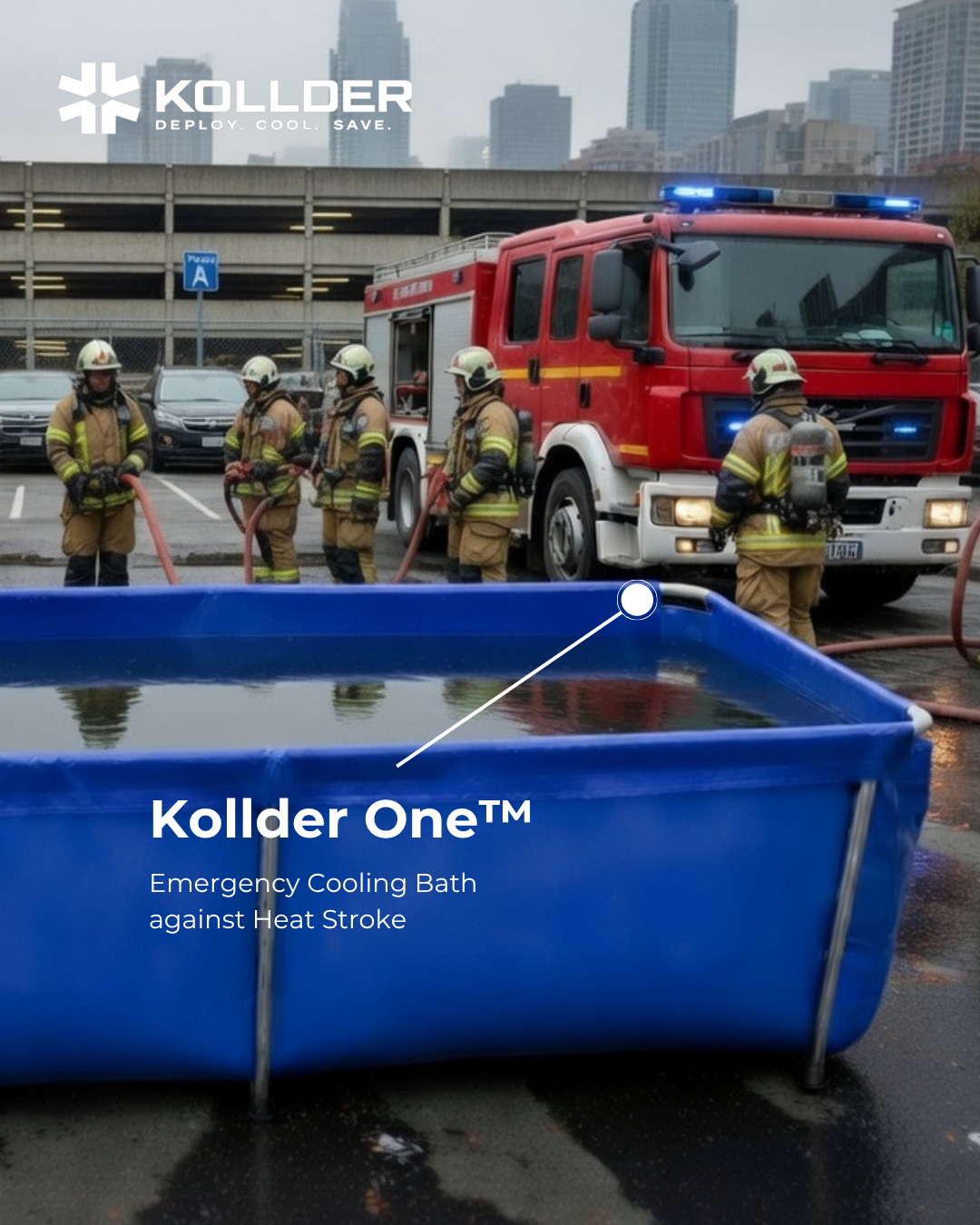
205 × 80 × 60 cm deployed. Stainless steel frame, SS304 Ø6mm stainless hinges, 6 support points with cross-bracing: it stays stable on shop flooring, concrete slabs, or job site ground.
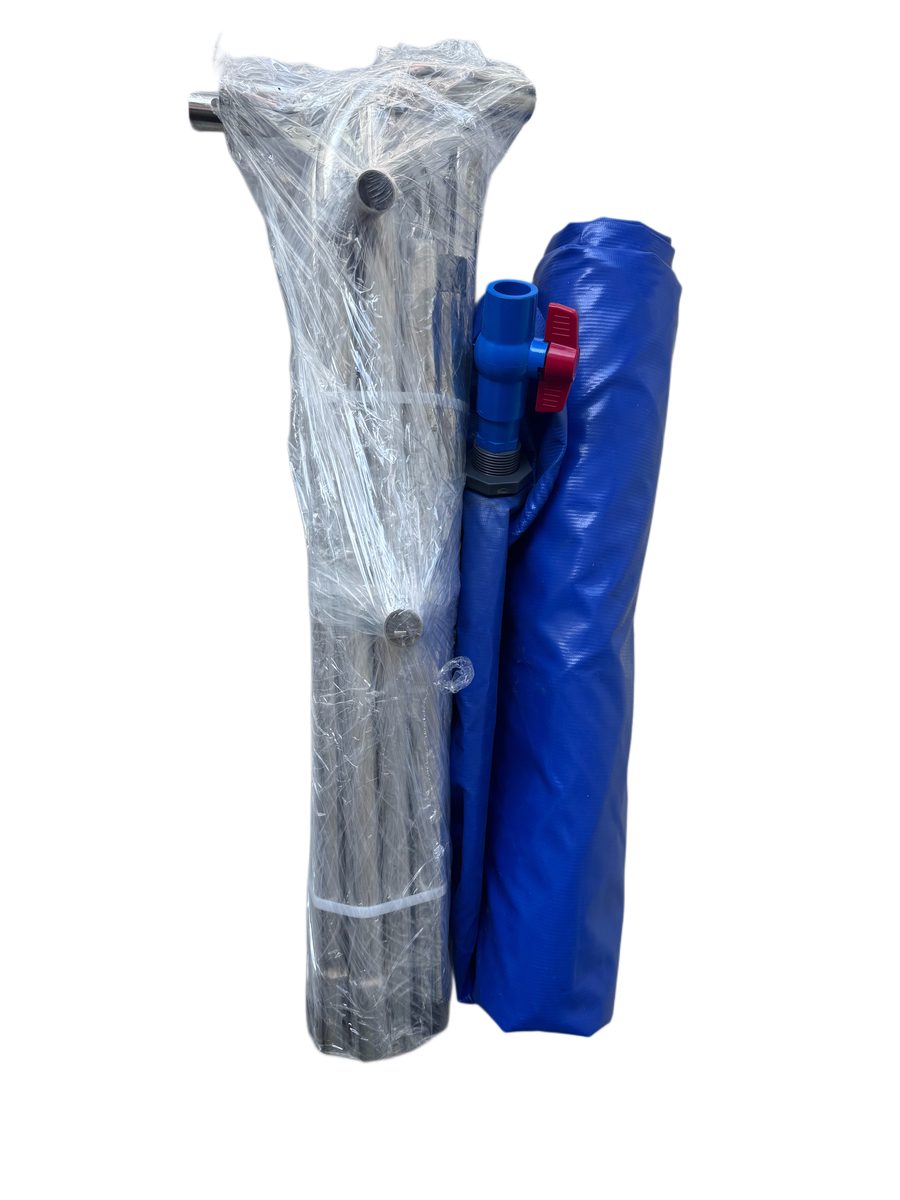
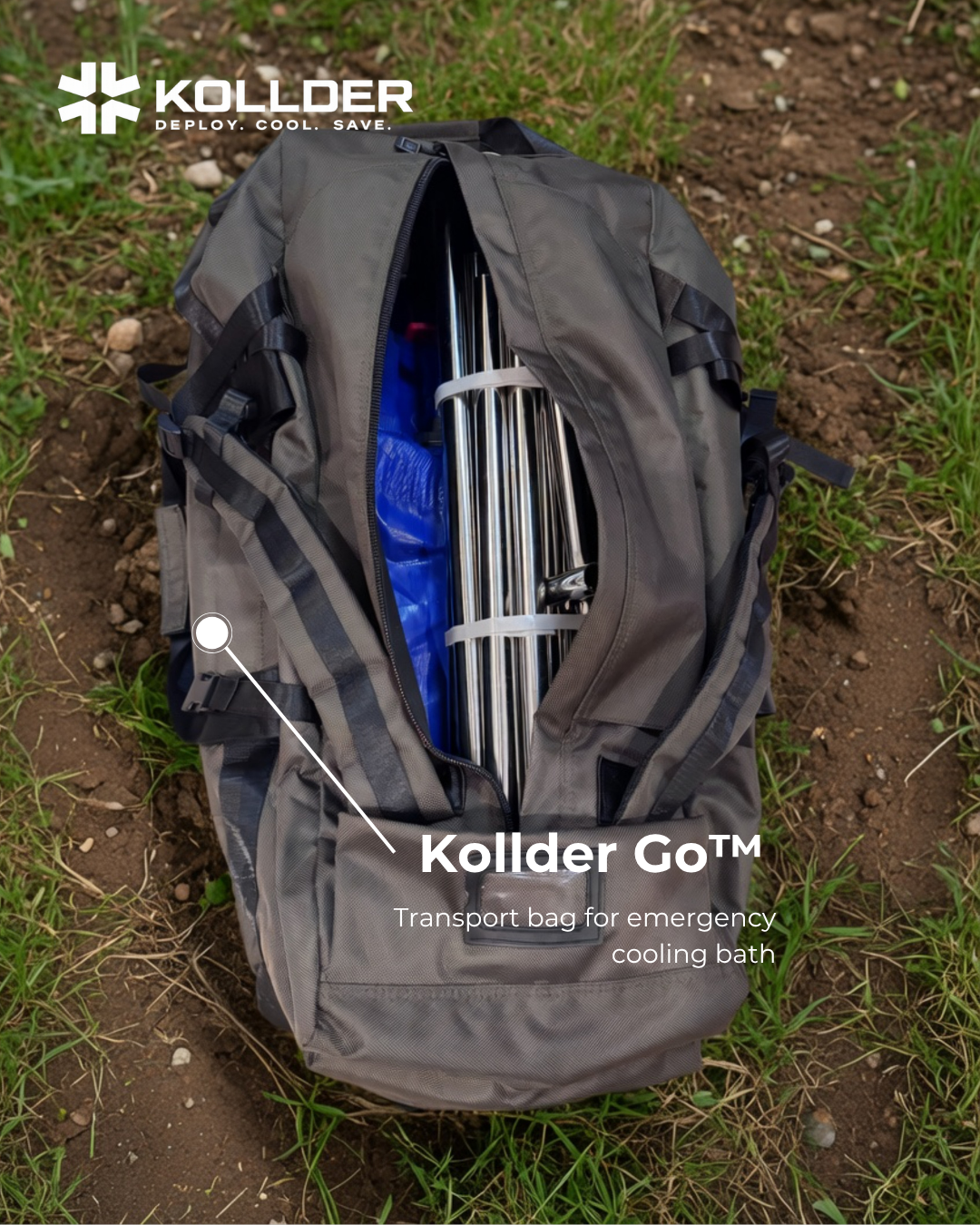
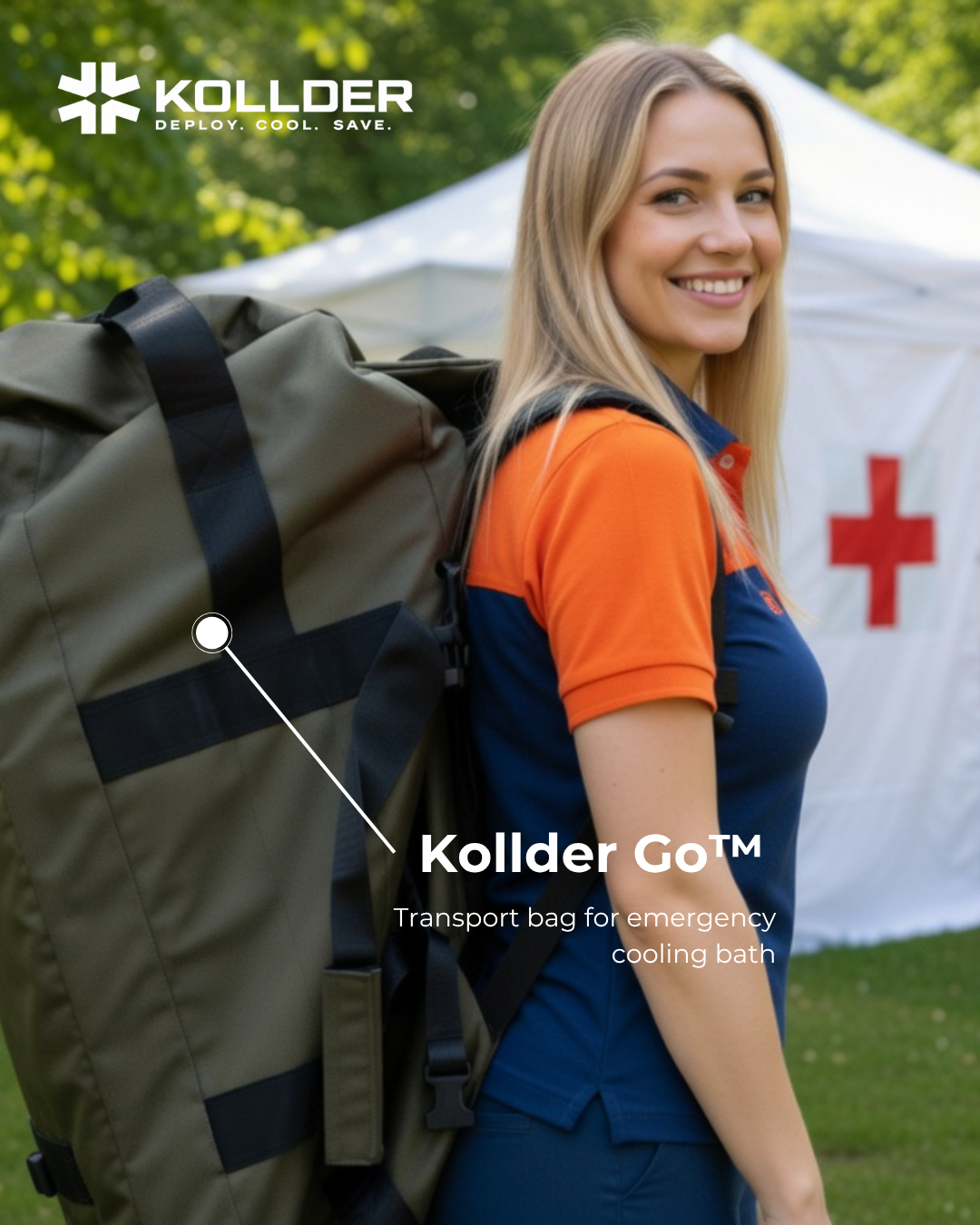
Hybrid transport bag, 85 × 10 × 10 cm folded, 11.1 kg, carried as a backpack, by hand, or wheeled. Stores in a safety office, first-aid room, or site vehicle with no special setup.
Whole-body immersion with full worker access allows the first-aid team to monitor them throughout cooling. The food-grade stainless steel structure holds up to industrial environments and disinfects quickly.
Radiant heat, physical effort, or confined spaces: five work environments where exertional heat stroke is a genuine occupational risk.
Radiant heat from furnaces and casting lines, heavy PPE, sustained effort: a well-documented and recurring risk. See our guide to metallurgy and steelmaking.
Full PPE, ambient heat, and confined process areas call for heightened vigilance on high-hazard sites. See our article on Seveso sites, PPE, and heat stroke prevention.
Fast pick rates, ovens and production lines, unconditioned warehouses during heat waves. See our guides on warehousing and logistics and food processing.
Confined heat underground, intense physical effort, and sometimes limited access for outside emergency services make this a distinct risk on civil engineering sites. See our guide to tunneling and major civil works.
For EHS teams evaluating multiple vendors, our buyer's framework for emergency cooling equipment lays out the criteria that matter beyond price.
The reference treatment, validated by the ACSM and the IOC, is whole-body cold water immersion started immediately on site, before any transport to the ER. This is the Cool First, Transport Second protocol: cooling takes priority over evacuation until the worker's core temperature drops below 38.6°C.
Regulatory frameworks such as the OSHA heat standard in the US and France's Décret n°2025-482 require employers to assess heat risk for exposed roles and put organizational measures in place, including a documented response for suspected heat stroke cases.
An emergency cooling tub designed for operational use should be deployable by one person, with no tools, in under 2 minutes. That matters on a heat-exposed work site, where the safety team needs to respond before EMS arrives.
Four criteria matter most: single-operator deployment speed, a compact footprint for storage in a shop or first-aid room, a durable, easy-to-clean material such as food-grade stainless steel, and 360-degree access so trained first responders can monitor the worker during immersion.
Yes. Folded down to 85 × 10 × 10 cm and 11.1 kg, it stores easily in a first-aid room, safety office, or site vehicle, and complements the organizational measures already in a heat illness prevention plan: breaks, hydration, work-rest schedules, and an immediate treatment procedure for suspected heat stroke.
Tell us about your needs. We'll get back to you within 48 hours with a proposal tailored to your number of sites and exposed headcount.
The Kollder emergency cooling tub at a glance: